

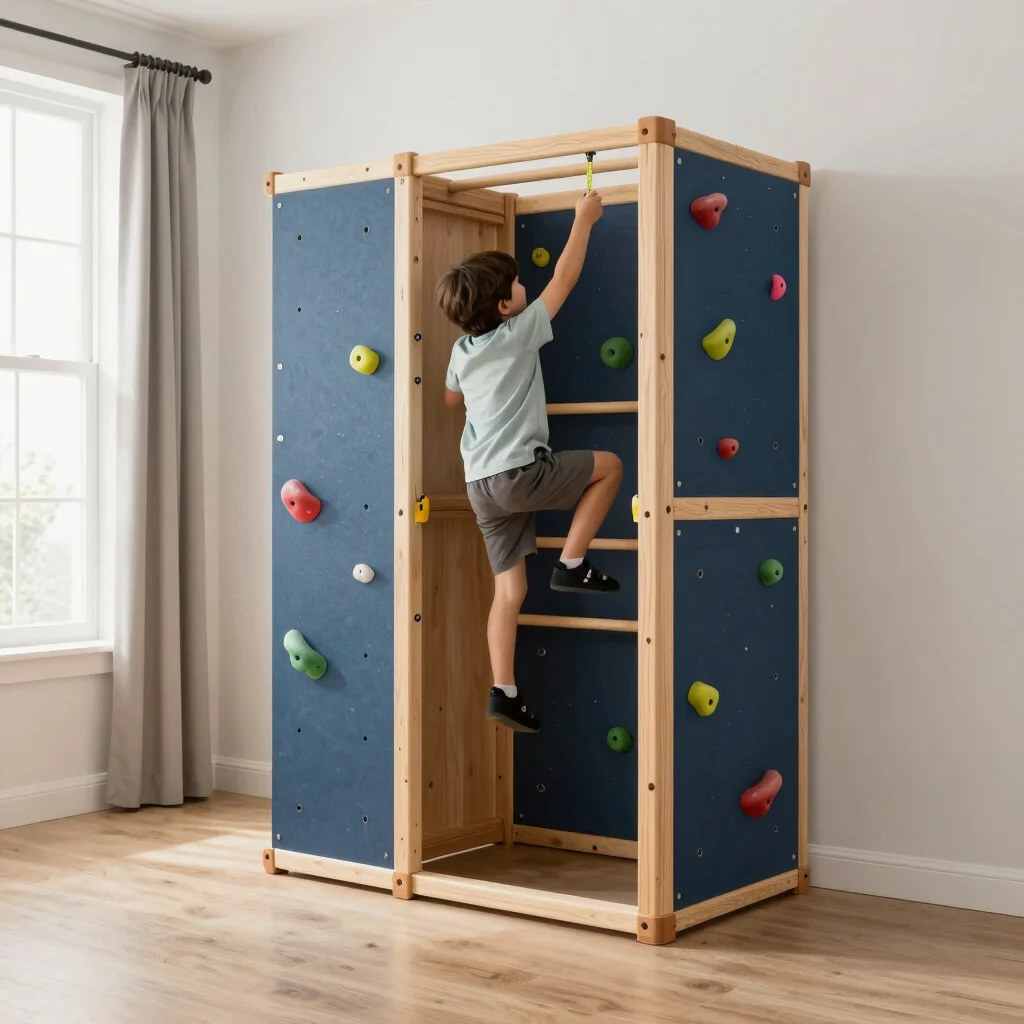
A climber can look compact in a product photo and still take over the corner you planned to use. Before comparing styles, measure the floor area available for play and note nearby walls, furniture, doorways, and storage. Those details make dimensions useful: they show whether a product fits your room in real life, not just on a listing.
Measure more than the footprint
Record the product’s listed width, depth, and height, then compare those measurements with the intended location. Check the manufacturer’s instructions for required clearance around the equipment and any ceiling-height guidance; there is no single clearance number that applies to every design. Include the space needed to set the climber up and put it away if it folds or has movable parts.
Look at the whole room, too. A low ceiling, a radiator, a swinging door, or a narrow path through a family room can change whether a climbing arch or larger set is practical. In a shared space, mark the proposed footprint with painter’s tape and walk around it before choosing.
Match the form to your routine
A standalone triangle may suit a home that needs one defined climbing structure, while a multi-piece set calls for more floor area and somewhere to store components. An arch may serve a different role, so compare the specific configuration rather than relying on category names alone. Check whether the listed dimensions describe one piece or the assembled setup.
Materials matter alongside size. Listings may identify wood species, finish, hardware, or fabric components, but details vary by model; look for specifics rather than assuming that every wooden climber is made or finished the same way. For age guidance, use the manufacturer’s label and instructions for the exact product.
Make a useful shortlist
Compare candidate products in the same units and note the source of each dimension, material description, age recommendation, and clearance instruction. If a listing leaves a detail unclear, check the manufacturer’s product documentation before treating it as confirmed. Craft-Ability’s guides distinguish available product information from firsthand testing; retailer links may earn the publisher a commission.
The useful choice is not automatically the smallest climber or the one with the most pieces. It is the option whose documented dimensions, setup needs, and storage plan fit the room you actually have. Measure the location first; then compare products against it.